 Reviews



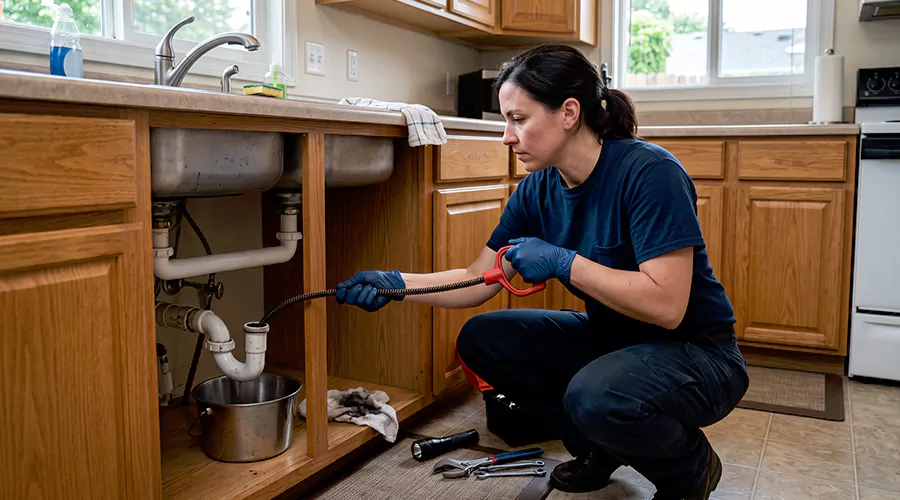
Snaking a drain removes or breaks apart an obstruction using a flexible cable inserted into the drainage pipe. A manual auger can reach farther than a plunger or short plastic hair-removal strip. Professional drain snaking and clog clearing cost approximately $95 to $500 in the United States according to 2026 pricing data. Drain cleaning can help remove deeper blockages and restore normal water flow when basic clearing methods are not enough.
The main advantage of a drain snake is reach. It can access material that cannot be removed directly through the drain opening.
However, successful snaking requires the correct equipment and controlled cable movement. Forcing the wrong tool through a bend can damage plumbing or create a difficult retrieval problem.
What Is a Drain Snake and How Does It Work?
A drain snake is a flexible tool designed to reach obstructions inside drainage pipes. Its cable travels through pipe bends while a rotating tip catches or disturbs trapped material. Different designs are available for shallow hair removal and deeper drain cleaning.
There are several common types.
| Tool | Typical Use | Main Limitation |
|---|---|---|
| Plastic drain strip | Shallow hair buildup | Limited reach |
| Manual cable auger | Sink and shower blockages | Requires careful cable control |
| Toilet auger | Obstructions inside a toilet | Designed for toilet trap geometry |
| Powered drain auger | More demanding drain work | Greater risk if used incorrectly |
| Professional drain equipment | Deeper or more difficult restrictions | Requires suitable access |
A short plastic strip commonly measures 15 to 24 inches. Manual cable augers are available with considerably longer cables, including models around 25 feet.
A toilet requires a tool specifically designed to protect porcelain. An exposed general-purpose cable is not an appropriate replacement for a closet auger.
When Should You Use a Drain Snake?
A drain snake is useful when a blockage remains after visible debris has been removed and correct plunging has failed. It is particularly effective for hair or soft material that has collected beyond easy reach. However, not every drainage problem can be corrected with a cable.
Suitable situations include:
- A sink that remains slow after stopper cleaning.
- A shower with a blockage deeper than the drain cover.
- A bathtub that does not respond to ordinary plunging.
- A clean P-trap combined with continued backup.
- A recurring local obstruction that can be reached through an accessible drain.
Do not use a household auger as an improvised solution for suspected tree-root intrusion or visibly damaged piping.
The manufacturer's instructions should determine which pipe sizes and applications are suitable for the tool.
What Equipment Do You Need Before Snaking a Drain?
Prepare the working area and confirm that the auger is appropriate for the fixture before inserting the cable. Drain water can splash during clearing. A metal cable can also release stored tension unexpectedly as it moves through bends.
Gather the following equipment:
- A suitable manual drain auger.
- Waterproof cleaning gloves.
- Protective work gloves for handling the cable.
- Splash-resistant eye protection.
- A bucket for drainage water.
- Old towels or a protective floor covering.
- A screwdriver when a cover needs removal.
- A suitable brush for cleaning the cable afterward.
Check the auger for damage before use. A badly kinked cable is harder to control and may not feed smoothly through the pipe.
Avoid using a snake when corrosive drain cleaner is already present. Lowe's warns that chemical residue can splash during mechanical clearing.
How Do You Access the Drainpipe?
The access point depends on the fixture and the obstruction's suspected location. A sink often provides direct access through its removable P-trap. Bathtubs may provide better access through the overflow assembly. Shower drains generally allow access after their covers have been removed.
Bathroom and Kitchen Sinks
Place a bucket beneath the sink before removing the P-trap.
Loosen the connections carefully and inspect the trap for debris. If the trap is clean, the exposed pipe entering the wall provides a relatively direct path for the auger.
This approach also avoids feeding the cable through unnecessary bends.
Bathtubs
Many bathtubs provide better auger access through the overflow assembly.
Remove the overflow plate according to the fixture's design. Disconnect the stopper linkage if it prevents access.
The overflow route can be easier for a manual auger than forcing the cable through the lower drain opening.
Showers
Remove the drain cover and inspect the opening first.
Pull out visible hair before introducing the cable. Use controlled movements to prevent the exposed metal from scratching finished surfaces.
These access methods are consistent with current drain-snaking instructions from Lowe's.
How Do You Snake a Drain Step by Step?
Successful snaking requires advancing the cable gradually while rotating it through the obstruction. The cable should remain under control throughout the process. A sudden hard stop is not proof that the tool has reached a clog because normal pipe bends can produce resistance.
Follow this procedure:
- Position the auger: Place the cable tip inside the appropriate drain opening.
- Advance slowly: Feed the cable forward without forcing it.
- Watch for resistance: Stop when the cable becomes noticeably harder to move.
- Secure the cable: Use the tool's locking mechanism according to its instructions.
- Rotate the handle: Turn the cable while applying gentle forward pressure.
- Work through the restriction: Use small movements rather than excessive force.
- Retract carefully: Pull the cable back if it catches material.
- Remove debris: Dispose of captured material in the trash.
- Repeat when appropriate: Continue only if the cable movement or drainage is improving.
- Test the drain: Restore normal flow before putting the tool away.
Do not leave excessive unsupported cable between the auger and drain opening. That makes the cable harder to control.
Lowe's also warns that cable tension can build as the snake passes through pipe bends. The cable can release that energy unexpectedly.
How Can You Tell When the Snake Reaches the Clog?
A change in cable resistance can indicate that the snake has reached an obstruction. However, the same sensation can occur when the cable encounters a pipe bend. The cable's response to gentle rotation provides additional information.
- A soft obstruction may gradually give way while the handle is turned.
- A dense hair mass can catch on the auger tip and return with the cable.
- A rigid object may create an unchanging stop that does not respond to normal tool movement.
When resistance remains completely unchanged, withdraw the cable slightly and attempt to reposition it.
Do not assume that increasing force will solve the problem.
What Should You Do if the Drain Snake Gets Stuck?
A stuck drain snake should be handled by releasing pressure and carefully reversing the cable's movement. Continued force can damage the cable or surrounding plumbing. The first step is to stop advancing and determine whether the cable is binding around a bend.
Try these actions:
- Stop pushing the cable.
- Release excessive forward pressure.
- Rotate the handle gently according to the manufacturer's instructions.
- Retract the cable a short distance.
- Attempt to straighten any unsupported cable.
- Withdraw the tool if normal movement returns.
- Stop when the cable cannot be moved safely.
Do not use excessive pulling force against a cable that may be caught inside damaged piping.
What Mistakes Should You Avoid?
Common snaking mistakes involve incorrect tool selection or excessive force. A drain snake should move through suitable piping without damaging connections. The goal is controlled access to the obstruction rather than forcing the cable through every point of resistance.
Avoid these mistakes:
- Using an exposed metal cable inside a toilet bowl.
- Using a damaged or badly kinked auger.
- Snaking a drain containing unknown chemical cleaner.
- Allowing unsupported cable to twist around itself.
- Forcing the auger through rigid resistance.
- Using powered equipment without understanding its operating instructions.
- Assuming that reaching the cable's maximum length proves the pipe is clear.
For suspected roots or visibly damaged pipes, ordinary household snaking may be inappropriate.
How Can You Test the Drain After Snaking?
A drain should be tested under normal water flow after the obstruction has been removed. A cable may open only a small passage through dense material. A successful result requires consistent drainage rather than a single improvement in water level.
Use the following test:
- Remove the auger completely.
- Reinstall any removed drain components.
- Run water at a low rate.
- Inspect accessible plumbing connections.
- Increase the water flow gradually.
- Continue for several minutes.
- Watch for renewed pooling or backup.
If a sink P-trap was removed, inspect every joint for leaks.
The drain should accept normal flow without water returning through another fixture.
How Much Does Drain Snaking Cost in 2026?
Drain snaking costs depend on the location of the obstruction and the equipment required. A household hand auger can reduce the cost of simple DIY projects. Professional work becomes more expensive when the blockage sits in a shared or main drainage line.
| Drain-Clearing Work | Reported 2026 U.S. Cost |
|---|---|
| General professional drain snaking or clog clearing | 95–500 |
| Typical professional drain cleaning | 147–352 |
| Kitchen sink drain clearing | 110–215 |
| Main sewer line clog repair | $380 national average |
These figures come from national cost guides and are not fixed local prices. More complicated jobs can require separate diagnostic work.
When Should You Call a Professional?
Professional assistance is appropriate when the auger cannot reach the obstruction or the cable repeatedly meets resistance that cannot be identified. Multiple affected fixtures also suggest that the blockage may be located in shared piping instead of the accessible fixture drain.
Consider professional diagnosis when:
- A manual auger cannot restore drainage.
- The cable becomes trapped.
- Several drains are affected simultaneously.
- Wastewater backs into a shower or another low fixture.
- You suspect damaged or collapsed piping.
- Tree-root intrusion is possible.
- The same blockage returns repeatedly.
Deeper problems may require inspection before selecting the correct clearing equipment.
How Do You Clean and Store a Drain Snake?
A drain snake should be cleaned and dried after use because contaminated water and debris remain attached to the cable. Proper storage also helps prevent corrosion and makes the tool easier to operate during its next use.
After clearing the drain:
- Remove visible debris from the cable.
- Clean the tool according to the manufacturer's instructions.
- Wipe the cable thoroughly.
- Allow the components to dry.
- Inspect the cable for damage.
- Store the tool away from household cleaning products.
Avoid retracting a heavily contaminated cable directly into its storage drum without cleaning it.
Conclusion
Learning how to snake a drain requires the correct access point and controlled cable movement. Choose an auger suited to the fixture and advance it gradually. Rotate gently when resistance appears and remove captured debris before testing the drain. Stop when the cable becomes trapped or the obstruction appears beyond normal household-tool reach. Professional diagnosis may then be appropriate. Inspect your auger before storing it for future use.
Frequently Asked Questions
How far can a drain snake reach?
Reach depends on the tool. Some manual cable augers have cables around 25 feet long.
Can you snake a drain without removing the P-trap?
Sometimes. Removing the trap often provides better access to the wall-side pipe.
Can a drain snake damage PVC pipes?
Incorrect use or excessive force can damage some plumbing. Follow the tool manufacturer's instructions.
Should you snake a drain after using chemical cleaner?
No. Chemical residue can splash during snaking and cause injuries.
Why is my drain still slow after snaking?
The cable may have opened only a narrow passage through the obstruction. Additional material may remain.